Psychology Licensure in Alaska: Requirements and Steps
To become a licensed psychologist in Alaska, you need a doctoral degree (PhD or PsyD) from an accredited program, post-doctoral supervised experience that meets Board requirements, and passing scores on two exams: the EPPP and the Alaska State Law and Ethics Examination. Alaska doesn’t permit psychology licensure below the doctoral level.
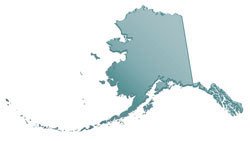
Alaska serves roughly 735,000 people spread across one of the most geographically isolated states in the country. Rural communities often rely on a small number of licensed mental health professionals, which means the psychologists who earn their license here fill roles with significant responsibility. If you’re working toward that license, here’s what the Alaska Board of Psychologists and Psychological Associate Examiners requires.
According to the Bureau of Labor Statistics, approximately 110 clinical and counseling psychologists are employed in Alaska, earning a mean annual salary of $111,840. Licensed psychologists work across hospital systems, school districts, tribal health organizations, VA facilities, and private practice. Demand for qualified professionals exists across a range of these settings.
The path to licensure follows a defined sequence: bachelor’s degree, then a master’s, then a doctorate, then supervised post-doctoral experience, then two licensing exams. Alaska does not provide alternative pathways at any stage. If you’re exploring a different entry point into human services work in the state, you can also look at other human services roles in Alaska that don’t require doctoral-level training.


Education Requirements
A bachelor’s degree in psychology is the starting point, though most doctoral programs don’t require a psychology major specifically. What they do expect is substantial psychology coursework on your transcript. This stage can be used to explore different specialties and confirm which direction fits you before committing to a graduate program.
A master’s degree in psychology comes next. Some states allow limited practice at the master’s level. Alaska doesn’t. Your master’s program won’t get you a license on its own here, but it’s a required step on the way to your doctorate and may strengthen your application for doctoral program admission. The program should be identified as a psychology program and must include a supervised practicum or laboratory component.
Full licensure requires a doctoral degree in psychology. Alaska recognizes clinical psychology, counseling psychology, and other specialties accepted by the Board. The Board expects programs to meet the standards set out in Alaska statutes, and a common way to satisfy that is to graduate from a program accredited by the American Psychological Association (APA). If your program isn’t APA-accredited, the Board will ask detailed questions about your curriculum at the time of application.
Both the PhD (Doctor of Philosophy) and the PsyD (Doctor of Psychology) are recognized for licensure. PhD programs are typically more research-focused. PsyD programs emphasize clinical practice. Either qualifies you to pursue licensure in Alaska.
Post-Doctoral Supervised Experience
Once you have your doctorate, the next step is applying for a temporary license and completing post-doctoral supervised experience. You’ll submit proof of your education and a supervision plan to the Board. The temporary license requires a fee set by the Board.
Your supervised experience must meet Board requirements for total hours, supervision structure, and types of direct client service. The work must be completed over a Board-defined timeframe. Your primary supervisor must be a licensed psychologist or another qualified professional as approved by the Board. APA-accredited internship experiences are generally accepted. Non-APA internships and training programs must meet regulations set by the Alaska Board.
For current requirements on hours, supervision ratios, and service-type minimums, consult the Alaska Board of Psychologists and Psychological Associate Examiners directly, as these requirements are subject to change.
The Licensing Exams
After completing your supervised experience, you can apply to take the two required exams.
The Examination for Professional Practice in Psychology (EPPP) is a standardized national licensing exam administered by the Association of State and Provincial Psychology Boards (ASPPB). The exam is administered at testing locations across the U.S. and Canada, including Anchorage.
You’ll also need to pass the Alaska State Law and Ethics Examination, which is administered directly by the Board. This exam covers the laws and ethical standards governing psychology practice in Alaska specifically.
Both exams are required prior to applying for your permanent license. The permanent license requires a fee set by the Board.
Reference Letters
The Alaska Board requires professional references as defined by the Board before a permanent license is granted. Start building those professional relationships during your doctoral program. Your internship is the most natural place to do that, and the Board’s requirement is a good reason not to leave it until the last stage of the process.
Where Psychologists Work in Alaska
Licensed psychologists in Alaska work in a range of settings. Hospital systems, school districts, tribal health organizations, university counseling centers, VA facilities, and correctional programs all employ psychologists. Some set up private practices in Anchorage, Fairbanks, or Juneau. Others take positions in rural and remote communities where access to mental health care is limited and which often attracts professionals looking to serve underserved populations.
If you’re drawn to school settings specifically, a licensed psychologist credential provides access to positions that other human services degrees don’t reach. Alaska’s school districts span 53 districts and nearly 500 schools, many of them in rural areas where mental health support is scarce.
Frequently Asked Questions
Do I need a doctorate to become a licensed psychologist in Alaska?
Yes. Alaska requires a doctoral degree (either a PhD or PsyD) for full psychology licensure. The state doesn’t offer master’s-level psychology licensure. If you want to practice mental health care with a master’s degree, you’d be looking at a different license type, such as Licensed Professional Counselor (LPC) or Licensed Clinical Social Worker (LCSW).
What is the EPPP?
The Examination for Professional Practice in Psychology (EPPP) is a standardized national licensing exam developed by the Association of State and Provincial Psychology Boards (ASPPB). Alaska requires a passing score prior to applying for your permanent license.
How long does the post-doctoral supervised experience take?
The supervised experience must be completed over a Board-defined timeframe and must meet requirements for total hours, supervision structure, and direct client service. You’ll need to apply for a temporary license and submit a supervision plan before you can begin. Check the Alaska Board’s current requirements directly, as specifics are subject to change.
What is a Psychological Associate in Alaska?
A Psychological Associate is a separate license category in Alaska for candidates who have completed a master’s degree and met Board requirements. It’s a supervised practice credential, not an independent license. Some candidates operate under this designation during their post-doctoral experience phase. Full independent practice requires the licensed psychologist credential.
Can I transfer my psychology license from another state?
Alaska offers out-of-state licensure through two pathways. The first is demonstrating that your home state’s requirements are substantially equivalent to Alaska’s. The second is presenting credentials as a diplomate of the American Board of Professional Psychology (ABPP), with documentation coming directly from the ABPP. Alaska also offers a courtesy license for out-of-state practitioners who need to practice in the state temporarily.
Key Takeaways
- Doctoral degree required: Alaska requires a PhD or PsyD for psychology licensure. Master’s-level practice under a psychology license isn’t available in this state.
- APA accreditation matters: Graduating from an APA-accredited program is a common way to satisfy Board requirements at the time of application.
- Post-doctoral supervised experience: Must meet Board requirements for total hours, supervision structure, and service types before you can sit for the licensing exams.
- Two exams required: The national EPPP and the Alaska State Law and Ethics Examination are both required prior to permanent licensure.
- Professional references required: The Board requires references as defined in current Board guidelines before granting a permanent license.
Ready to explore programs that prepare you for psychology licensure in Alaska? Browse degree options and learn more about related human services paths in the state.

2024 US Bureau of Labor Statistics salary figures for Clinical and Counseling Psychologists reflect state data, not school-specific information. Conditions in your area may vary. Data accessed April 2026.